
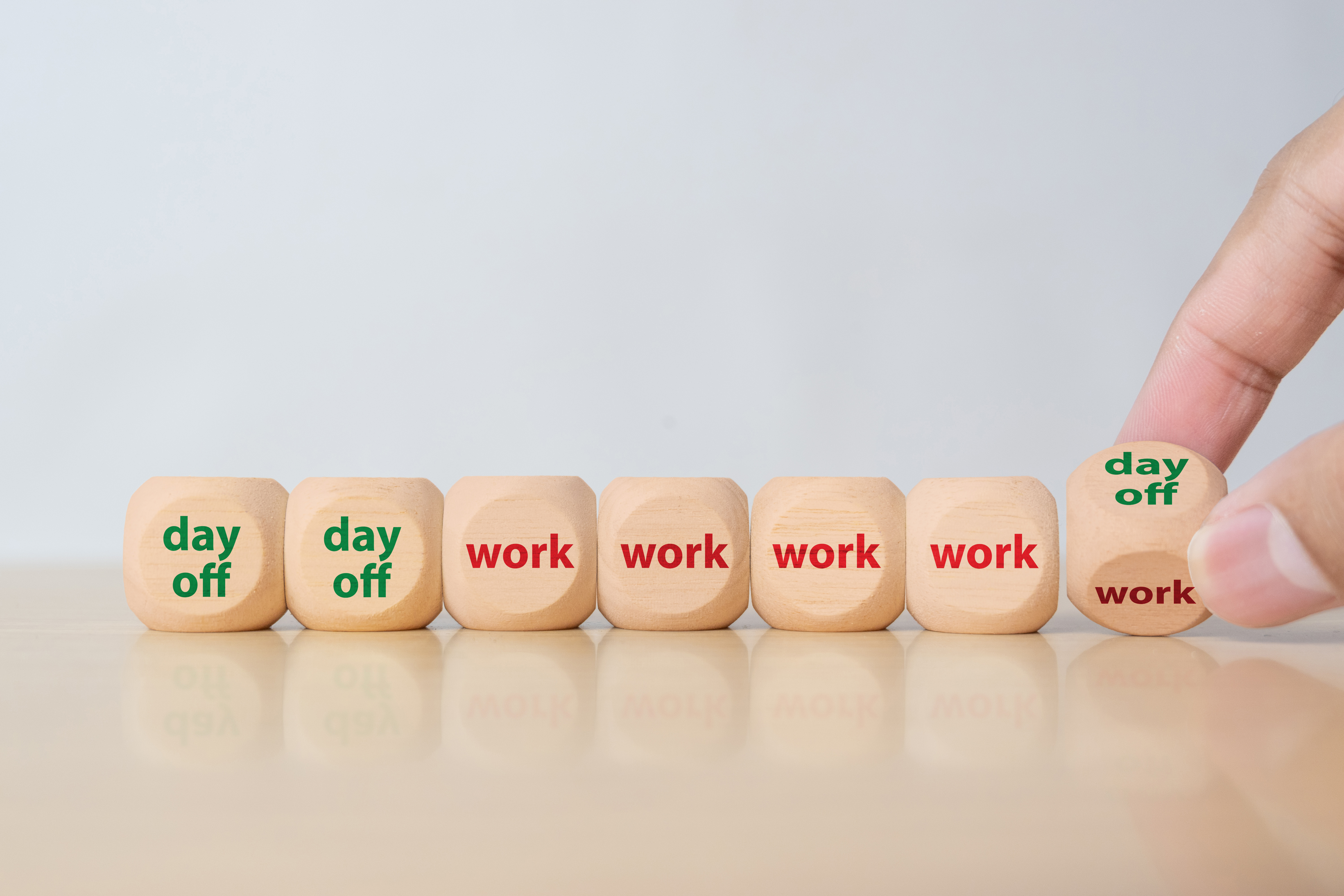
The four-day week has a branding problem.
Say the phrase and most people picture the same thing: Friday off, laptop shut, long weekend. Unsurprisingly, that sounds appealing.
But the extra day is not the most interesting part.
The interesting part is what has to happen inside an organisation before one working day can disappear without the output disappearing with it.
A four-day week only works when the organisation changes the work — not merely the calendar.
A full diary is not the same thing as a productive week
Many workplaces still treat time as a rough proxy for contribution. Busy calendar? Important. Long hours? Committed. Replies within thirty seconds? Definitely working.
The trouble is that visibility and value are not the same thing.
You can lose an afternoon to meetings that should have been an email, re-enter the same information in three systems and answer ten messages that would not have existed if the process was clearer. You were busy. Whether anything useful happened is another question.
By contrast, two uninterrupted hours spent solving the right problem can be worth far more than a day of visible activity.
A shorter week makes that distinction uncomfortable in a useful way. When time becomes scarce, organisations have to decide which work is genuinely earning its place.
The bad version is five days squeezed into four
This is where four-day-week experiments can go wrong.
The meeting schedule stays the same. Targets stay the same. Admin stays the same. Nobody removes a process, changes an approval route or questions whether every recurring task still needs to exist.
The only thing that changes is the calendar.
That is not work redesign. It is work compression.
A useful test: has the organisation removed unnecessary work, or has it simply asked people to complete the same workload faster?
If the answer is the second one, the shorter week can easily become a more intense week — four days of sprinting followed by one day spent recovering from them.
Productivity is mostly a question of friction
The four-day-week debate often gets reduced to a simple challenge: can people produce five days of output in four?
That sounds sensible until you ask what counts as output.
More emails are not necessarily better. More meetings are not necessarily better. More reports, approvals and status updates can make an organisation busier while making it slower.
Productivity improves when less effort is lost to friction — not when people are asked to remain permanently busy. AerialView
This is why shorter weeks can be revealing even for organisations that never intend to adopt one. They force a useful question: if we had 20% less time, what would we stop doing first?
The answer often tells you quite a lot about what should probably have been stopped already.
What has to change before the calendar does
Priorities have to become real
Everything cannot be urgent. If leaders cannot tell people which three things matter most, a shorter week simply turns the existing ambiguity into pressure.
Meetings need to earn their place
A meeting consumes the time of everyone in it. That sounds obvious, yet organisations often treat an hour with eight people as though it costs one hour rather than eight.
Shorter meetings, fewer attendees, better agendas and more written updates are not glamorous productivity innovations. They are just good housekeeping.
Processes need to lose their ceremonial steps
Duplicate data entry, habitual approvals, copied-in stakeholders and “because we always have” tasks become much harder to defend when there is less time available.
Focus needs protecting
If every hour is fragmented by messages, meetings and requests, the problem is not that people need to work faster. The problem is that the organisation has made concentration difficult.
Performance has to move away from presence
A shorter week is uncomfortable for managers who rely on visibility as evidence of contribution. It requires more confidence in judging outcomes, quality and impact.
There is no universal four-day-week template
A knowledge-work team may be able to close on a Friday. A hotel cannot. A hospital cannot. A logistics operation cannot decide that Thursdays are now optional.
That does not mean the idea is irrelevant outside office-based work. It means the design has to fit the job.
Possible models include:
- rotating non-working days;
- shorter shifts across five days;
- reduced annual hours rather than a fixed weekly pattern;
- seasonal arrangements during quieter periods;
- different models for different operational groups; and
- additional staffing where service coverage has to remain unchanged.
Fairness does not always mean identical schedules. It means the benefit has to be meaningful, and differences need an explanation people can understand.
A shorter week exposes weak management quickly
Extra time can hide a surprising amount of organisational mess.
Slow decisions are survivable when there is plenty of slack. Unclear delegation can be absorbed. Conflicting priorities can sit unresolved for a while because people simply stretch the day.
Take away some of that time and the weaknesses become obvious.
Managers have to make decisions earlier, remove obstacles faster and protect teams from work that no longer deserves attention.
They also have to protect the spirit of the arrangement. If people spend their “day off” checking email, finishing reports or staying vaguely available just in case, the policy has changed but the culture has not.
Do not start with Friday. Start with the problem
A trial should begin with a clear reason for doing it.
Is the aim retention? Wellbeing? Productivity? Recruitment? Lower absence? Better focus? A combination of several?
Without a clear objective, success becomes whatever result looks most flattering afterwards.
Define success before the trial
Track outcomes such as output, quality, customer experience, workload, absence, retention and wellbeing. Looking at only one measure can make a mixed result look deceptively simple.
Find the work that can disappear
Ask teams what they would stop, shorten, automate or combine if time suddenly became scarce. This is often where the most useful learning sits.
Listen beyond the enthusiastic majority
Senior employees, frontline teams, managers, part-time staff and people with caring responsibilities may experience the change very differently.
Protect the non-working time
If messages, meetings and low-level requests leak into the day off, the organisation has reduced contracted time without reducing working expectations.
Measure intensity as well as enthusiasm
People can love the idea and still find the working days unsustainably intense. Both things can be true at once.
The bigger question is whether work could be designed better anyway
The four-day week gets attention because the proposition is wonderfully simple: fewer days, same pay, same output.
But its most useful contribution may be the questions it forces organisations to ask.
Which work matters? Which meetings do not? Which processes exist because nobody has challenged them? How much effort disappears into coordination, duplication and waiting? Are people rewarded for contribution or for looking relentlessly available?
You do not need to adopt a four-day week to benefit from answering those questions.
The real lesson may be less dramatic: a surprising amount of the five-day week is not inevitable. It is just how the work happens to be designed today.
From idea to evidence
Thinking about how work could be designed differently?
If you are exploring productivity, workload, employee experience or new ways of working, AerialView can help make sense of the data, test the assumptions and turn the findings into something leaders can actually use.